
NAD+
NAD+ Price range: $21.60 through $52.00

Back to products
Melanotan
Melanotan Original price was: $44.00.Current price is: $35.20.

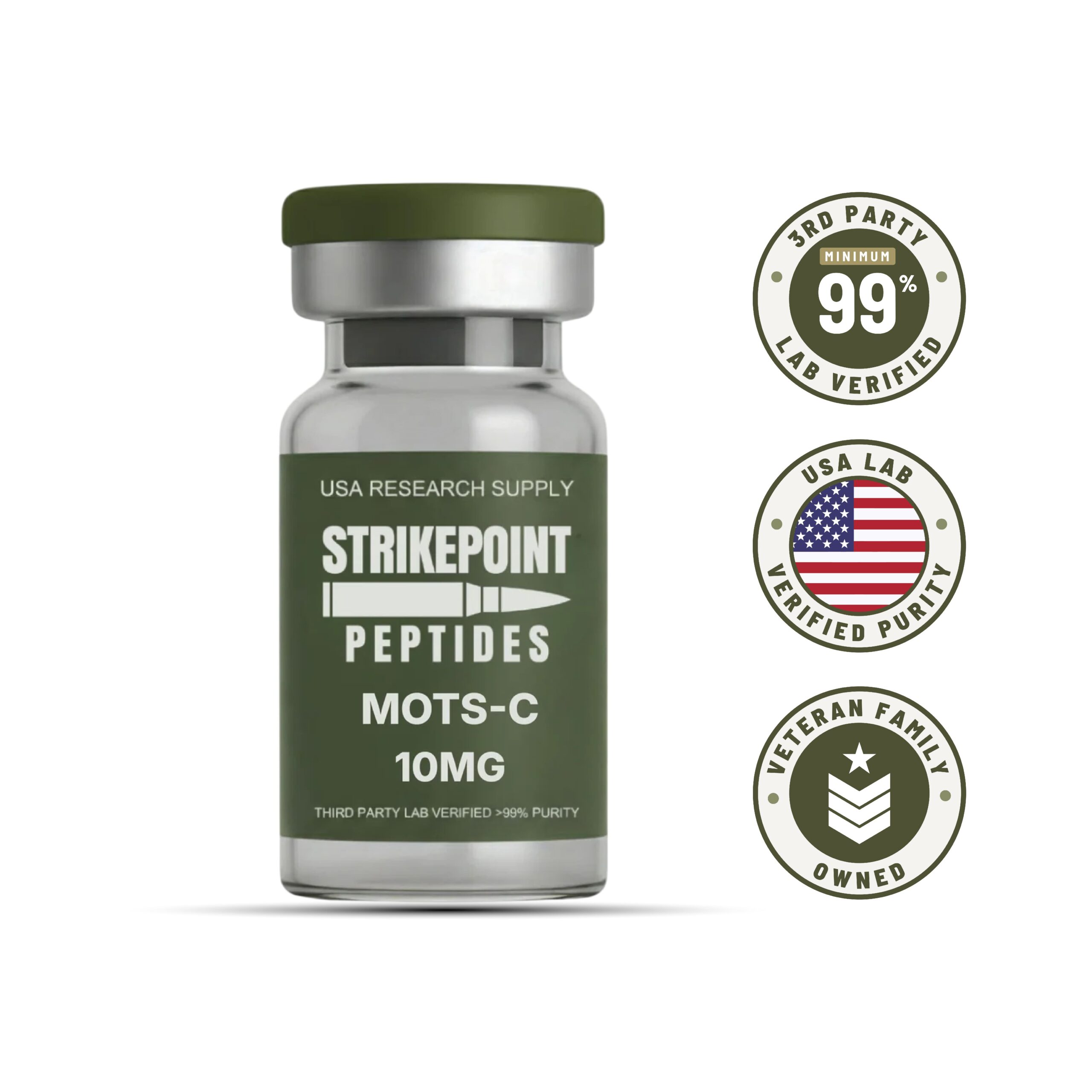
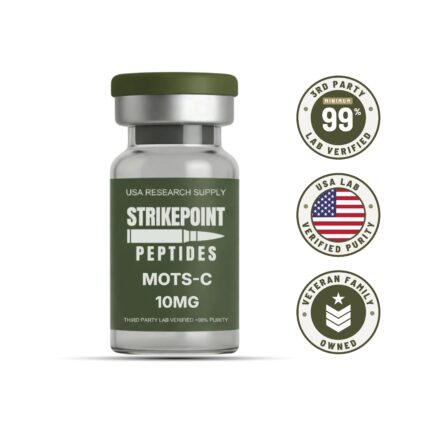
MOTS-c

15 BOUGHT IN LAST 24H

Price range: $33.44 through $118.40

Veteran Support
Mission Driven
Same-Day
Shipping
Third-Party
Tested
Secure
Checkout
SCIENTIFIC SPECIFICATIONS
Molecular Formula
C101H152N28O22S2
CAS Number
1627580-64-6
Molar Mass
2174.6 g/mol
Amino Acid Sequence
H-Met-Arg-Trp-Gln-Glu-Met-Gly-Tyr-Ile-Phe-Tyr-Pro-Arg-Lys-Leu-Arg-OH
Synonyms
Mitochondrial Open Reading Frame of the 12S rRNA-c, MOTS-c peptide, Mitochondrial-Derived Peptide MOTS-c
Solubility
Water-soluble
Organoleptic Profile
White to off-white powder
Composition
Lyophilized powder
Research Use Only
● VERIFIED ANALYSIS

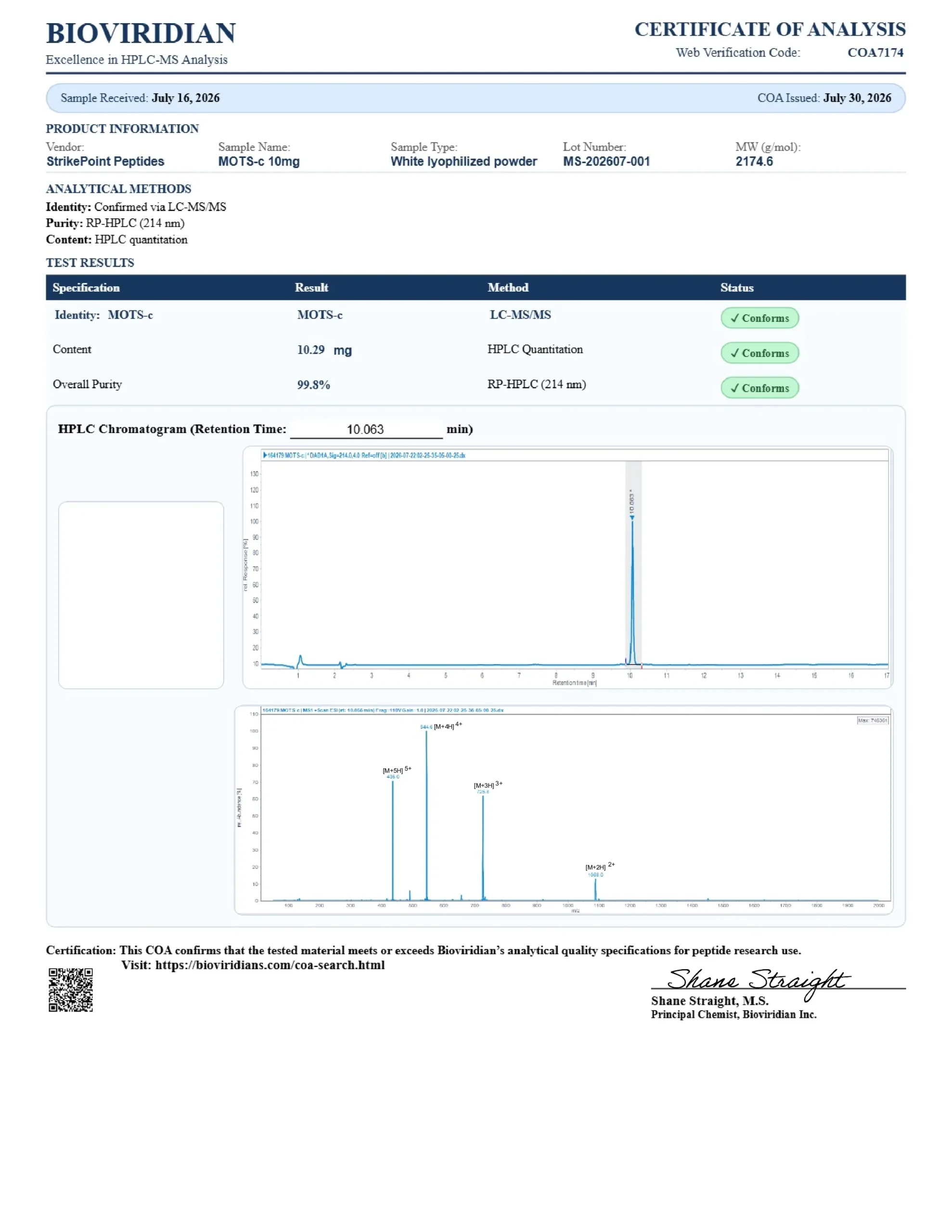
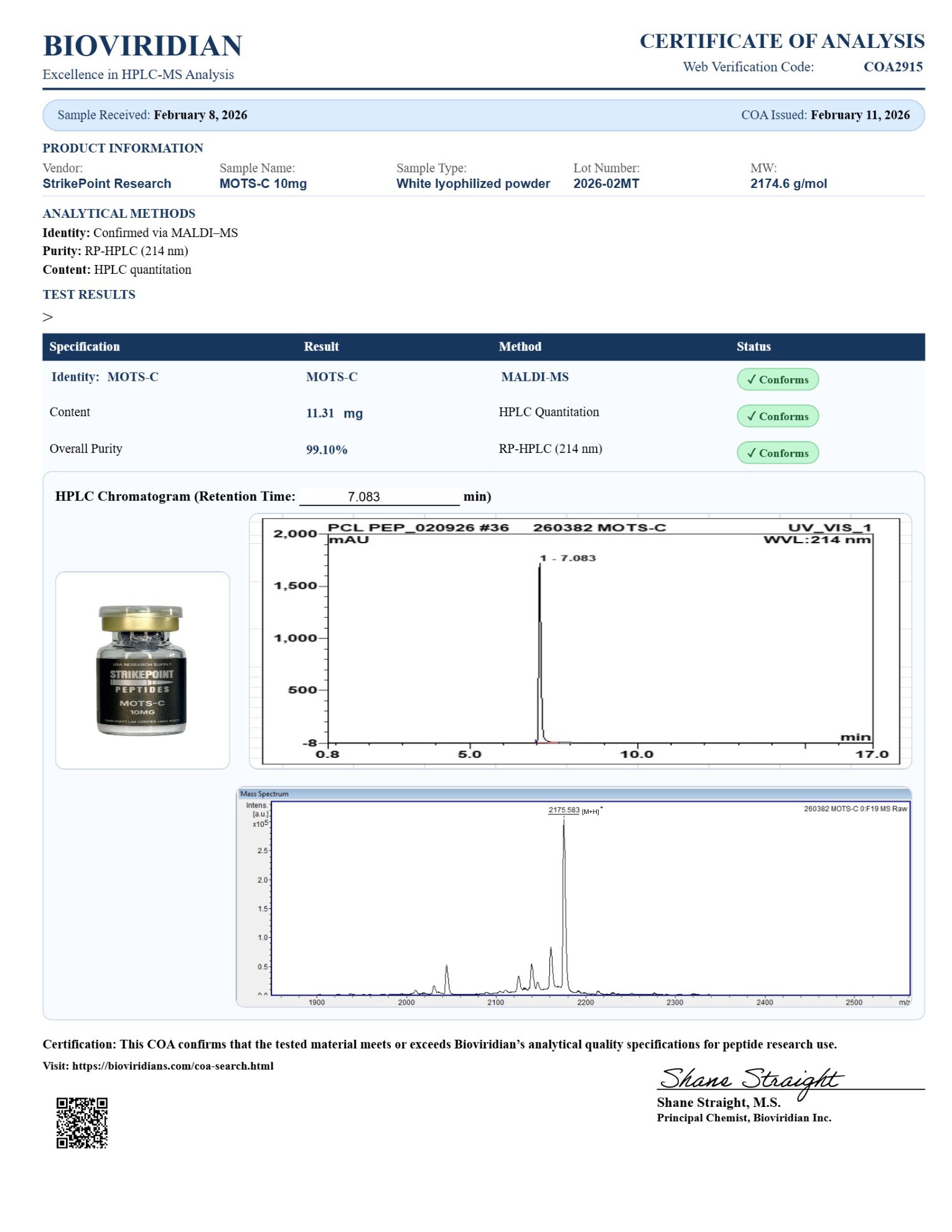
Third-Party Lab Results

Transparency is our priority. Download the full HPLC and Mass Spectrometry reports for the current batch #88291. Tested on Oct 24, 2023.

DOWNLOAD FULL REPORT (PDF)
PDF
HPLC_BPC157_Batch88291.pdf
Verified by Janoshik
PDF
MS_BPC157_Batch88291.pdf
Verified by Janoshik
Research Overview

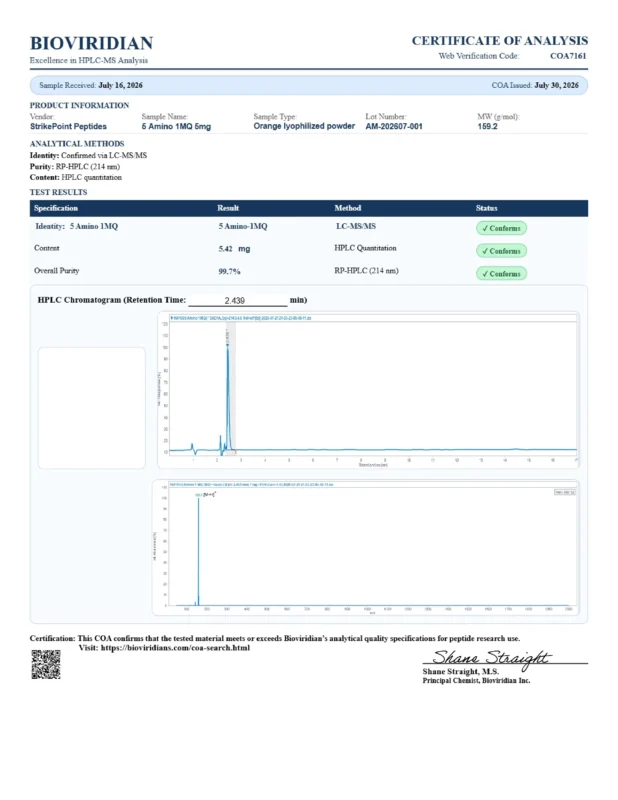
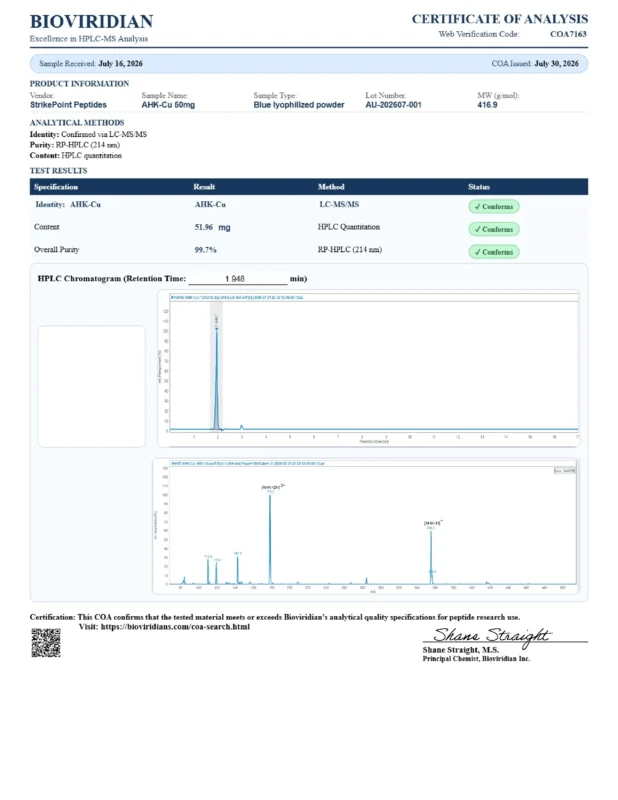
SLU-PP-332 Certificate of Analysis

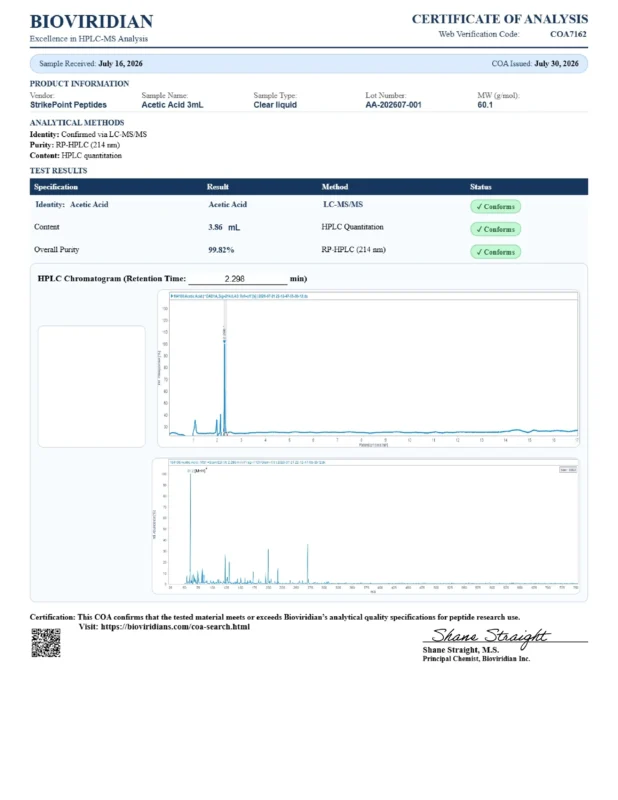
Third-party tested. Click image to view full-resolution certificate.


COA2877 Certificate of Analysis

MOTS-c is a 16-amino-acid peptide (Met-Arg-Trp-Gln-Glu-Met-Gly-Tyr-Ile-Phe-Tyr-Pro-Arg-Lys-Leu-Arg) derived from the mitochondrial genome, encoded within the 12S rRNA region. Classified as a mitochondrial-derived peptide (MDP), MOTS-c has become a significant focus of research in the fields of cellular energy regulation, stress resistance, and aging biology.

In laboratory settings, MOTS-c has been observed to modulate AMPK signaling, promote metabolic homeostasis, and interact with pathways that influence mitochondrial performance. It is widely used in non-clinical studies investigating peptide-based mitochondrial communication, systemic energy balance, and exercise adaptation models.

  • Peptide Type: Mitochondrial-Derived Peptide (MDP)
  • Sequence: Met-Arg-Trp-Gln-Glu-Met-Gly-Tyr-Ile-Phe-Tyr-Pro-Arg-Lys-Leu-Arg
  • Purity: ≥99% (HPLC-verified)
  • Molecular Focus: Mitochondrial signaling, AMPK activation, energy regulation
  • Applications: Aging research, metabolic stress response, mitochondrial homeostasis
  • Format: Lyophilized peptide, 40mg vial
  • Use Case: Laboratory research only
  • Mitochondrial communication with the nucleus
  • Regulation of cellular energy and nutrient sensing
  • Systemic metabolic homeostasis

While originally believed to act only within mitochondria, MOTS-c has now been detected in the nucleus and in circulation, confirming its role as a bona fide hormone-like signaling molecule.

Key areas of research interest include:

  • Metabolism and weight regulation
  • Exercise capacity and fatigue resistance
  • Insulin sensitivity and glucose handling
  • Bone remodeling and osteoporosis models
  • Longevity and age-related functional decline
  • Cardiometabolic and vascular health

MOTS-c has become a focus of intensive metabolic and gerontology research over the last several years due to its potential to modulate energy pathways that were historically accessible mainly through dietary restriction or exercise.

Storage & Handling

All peptides are supplied as sterile, lyophilized powder and are stable when handled correctly.

  • On arrival: Store vials in a cool, dry place away from heat and direct sunlight.
  • Long-term (powder): For optimal longevity, keep lyophilized peptides refrigerated to help maintain integrity.
  • After reconstitution: Use an appropriate research diluent (for example, BAC water). Store the reconstituted solution in the refrigerator and use within 20–30 days for best stability.

Note: Minimize exposure to moisture and repeated freeze–thaw cycles. Follow your institution's safety procedures when handling research materials.

FAQ 

Q: What is MOTS-c primarily used for in research?
A: It is used to study mitochondrial signaling, AMPK activation, stress adaptation, and metabolic pathway regulation in aging and obesity models.

Q: Is MOTS-c a natural peptide?
A: Yes, MOTS-c is an endogenous peptide encoded in the mitochondrial genome, making it a naturally occurring component of cellular regulatory networks.

Q: Is MOTS-c suitable for human supplementation?
A: No. MOTS-c is strictly intended for in-vitro or in-vivo laboratory research and is not approved for human or therapeutic use.

Q: How does MOTS-c influence aging research?
A: MOTS-c has shown promise in preclinical aging models by promoting metabolic efficiency, enhancing resilience to oxidative stress, and modulating longevity-associated pathways.

Q: What’s the recommended storage for MOTS-c?
A: Store the lyophilized vial at -20°C. After reconstitution with sterile solvent, keep refrigerated and use within a few days under sterile lab protocols.

i
Research Use Only: This product is intended for laboratory research use only and is not for human consumption, diagnostic, or therapeutic use.

Researcher Reviews

Reviews

There are no reviews yet.

Be the first to review “MOTS-c”

Your email address will not be published. Required fields are marked *