Ipamorelin
Ipamorelin Price range: $26.40 through $39.60
Back to products
Glutathione
Glutathione Original price was: $60.50.Current price is: $48.40.

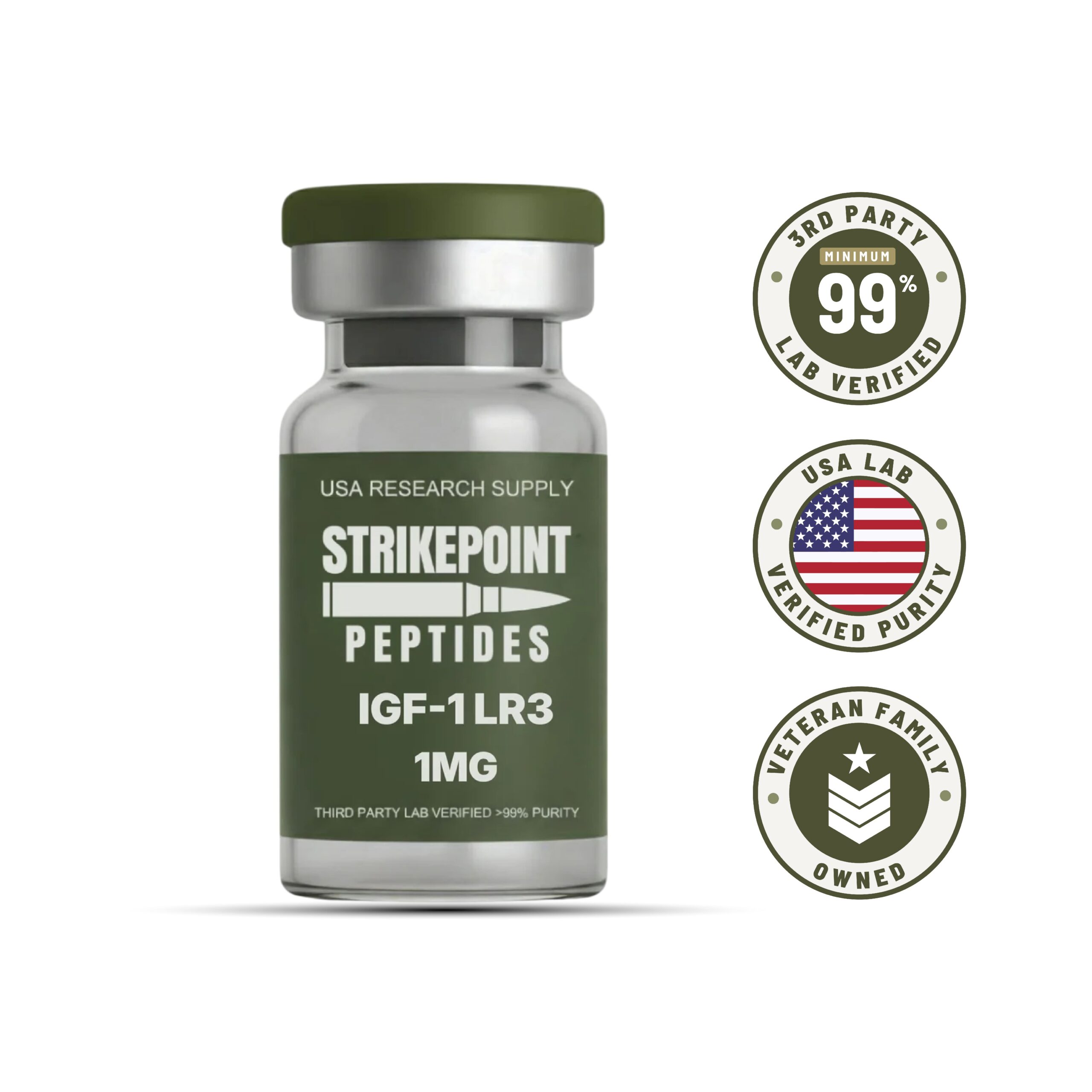
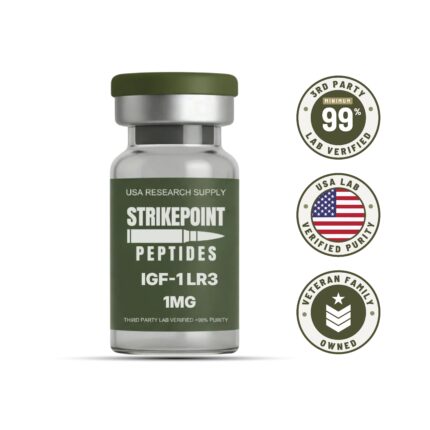
IGF-1 LR3

15 BOUGHT IN LAST 24H

Original price was: $67.00.Current price is: $53.60.

🎖 Verified veterans save 15% — for life. Learn More →
99%+ Purity Guaranteed
VETERAN MISSION
Same-Day
Shipping
Third-Party
Tested
Secure
Checkout
SCIENTIFIC SPECIFICATIONS
Molecular Formula
C₄₀₀H₆₂₅N₁₁₁O₁₁₅S₉
CAS
946870-92-4
Molar Mass
9117.5 g/mol
Amino Acid Sequence
Synonyms
Solubility
Form
Research Use Only
● VERIFIED ANALYSIS

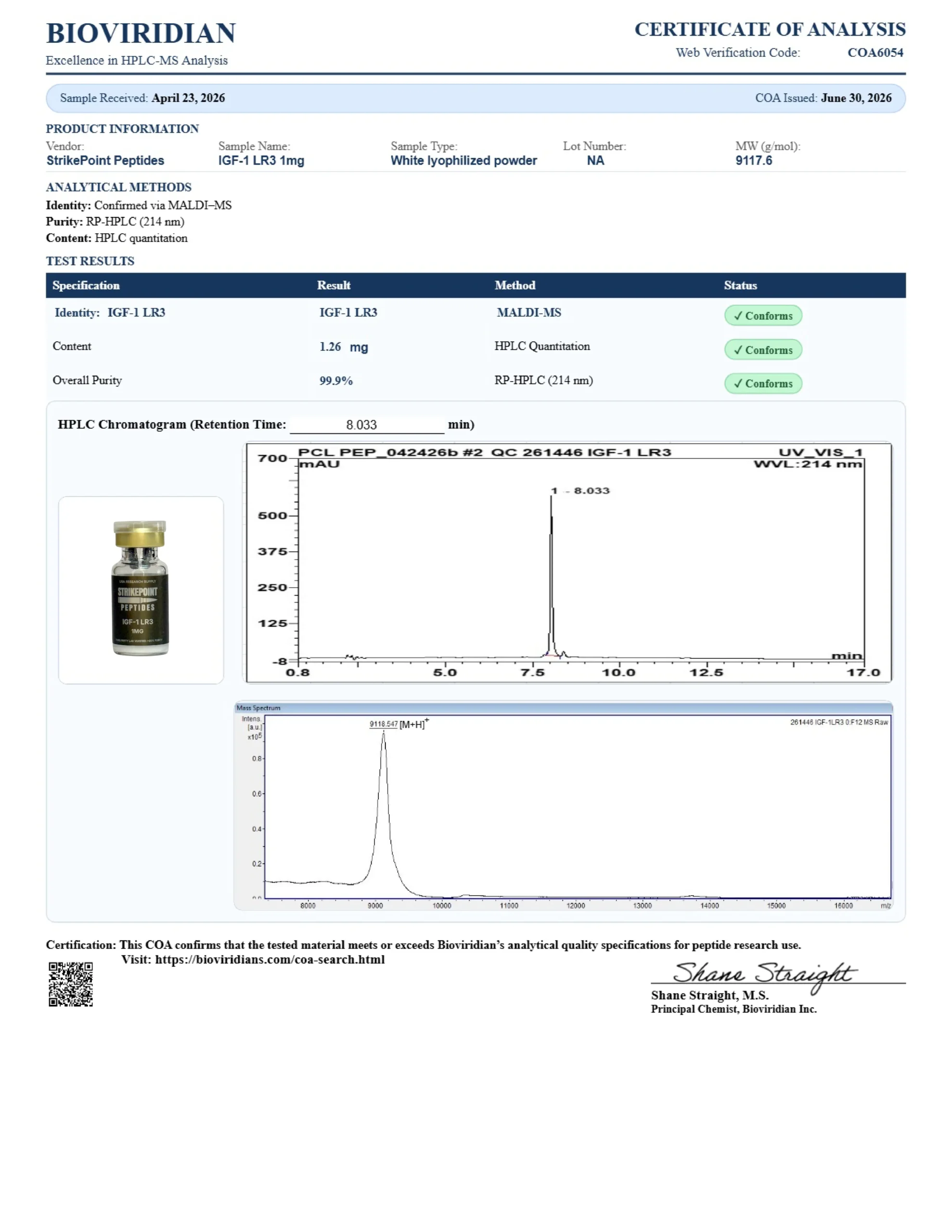
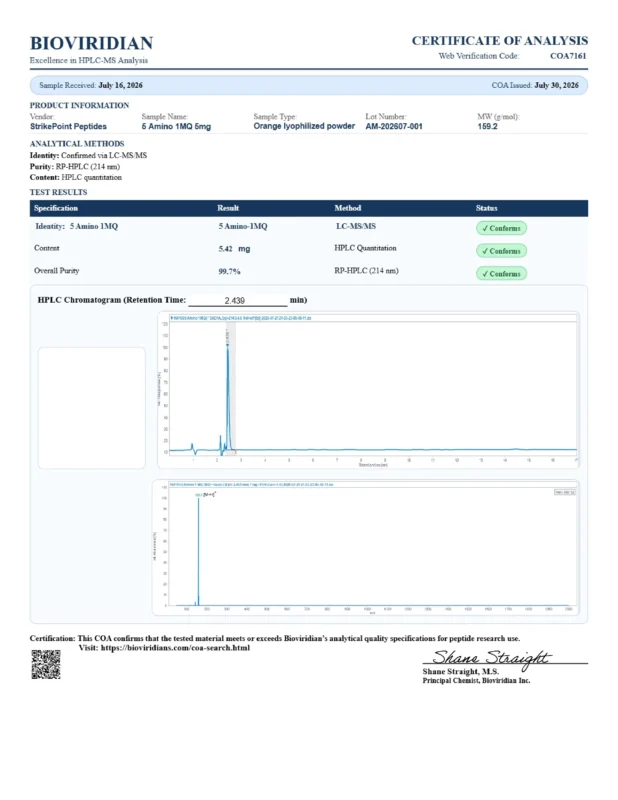
Third-Party Lab Results

Transparency is our priority. Download the full HPLC and Mass Spectrometry reports for the current batch #88291. Tested on Oct 24, 2023.

DOWNLOAD FULL REPORT (PDF)
PDF
HPLC_BPC157_Batch88291.pdf
Verified by Janoshik
PDF
MS_BPC157_Batch88291.pdf
Verified by Janoshik
Research Overview

IGF-1 LR3 (Insulin-like Growth Factor-1 Long R3) is a synthetic, extended-acting analogue of native IGF-1 designed for research use in models of cell growth, tissue adaptation, and metabolic signaling. Structurally modified to reduce binding to IGF-binding proteins, IGF-1 LR3 may remain bioactive significantly longer than unmodified IGF-1 under experimental conditions, allowing for sustained receptor engagement and downstream pathway analysis.

In preclinical and in vitro systems, IGF-1 LR3 is commonly used to explore mechanisms of cell proliferation and differentiation, myostatin-related signaling in muscle biology, and metabolic processes involving glucose handling and lipid mobilization. IGF-1 LR3 supplied for research is not intended for human or veterinary use and should only be handled by qualified professionals in controlled laboratory environments.

IGF-1 LR3 is a recombinant peptide derivative of insulin-like growth factor-1 with a modified sequence that includes an arginine substitution at position 3 and an extended N-terminus. These changes are associated with reduced affinity for IGF-binding proteins and a prolonged active duration in experimental models.

Key areas of interest include:

  • Cell proliferation and differentiation in multiple tissue types
  • Muscle biology, including satellite cell behavior and myostatin-related pathways
  • Metabolic signaling, particularly IGF-1R and insulin receptor cross-talk
  • Tissue maintenance and repair models in long-term aging and glucocorticoid-exposure paradigms

By offering a prolonged IGF-1–like signal, IGF-1 LR3 enables researchers to investigate sustained pathway activation and long-term cellular responses in a more controlled way than with short-lived native IGF-1.

Storage & Handling

All peptides are supplied as sterile, lyophilized powder and are stable when handled correctly.

  • On arrival: Store vials in a cool, dry place away from heat and direct sunlight.
  • Long-term (powder): For optimal longevity, keep lyophilized peptides refrigerated to help maintain integrity.
  • After reconstitution: Use an appropriate research diluent (for example, BAC water). Store the reconstituted solution in the refrigerator and use within 20–30 days for best stability.

Note: Minimize exposure to moisture and repeated freeze–thaw cycles. Follow your institution's safety procedures when handling research materials.

FAQ 

Q1: What is IGF-1 LR3 used for in research?
A1: IGF-1 LR3 is used to study cell proliferation and differentiation, muscle biology, metabolic signaling, and tissue-maintenance pathways. Its extended activity profile makes it suitable for experiments that require prolonged IGF-1–type signaling.

Q2: How is IGF-1 LR3 different from native IGF-1?
A2:
IGF-1 LR3 contains sequence modifications that reduce its binding to IGF-binding proteins and extend its functional duration in experimental models. As a result, it generally remains active longer than native IGF-1 under comparable conditions.

Q3: Does IGF-1 LR3 cause muscle hypertrophy in research models?
A3: Research typically characterizes IGF-1 and its analogues, including IGF-1 LR3, as supporting hyperplasia (increased cell number) rather than direct hypertrophy (increased cell size). It is used to study muscle-cell proliferation, differentiation, and myostatin-related signaling, not as a defined hypertrophic agent.

Q4: Is IGF-1 LR3 being studied in metabolic and glucose-related models?
A4: Yes. IGF-1 LR3 is used to investigate how IGF-1/insulin receptor signaling affects glucose uptake, lipid mobilization, and energy balance in controlled laboratory systems, including models relevant to insulin resistance and glucocorticoid exposure.

Q5: Is IGF-1 LR3 intended for human consumption or performance enhancement?
A5:
No. IGF-1 LR3 supplied by research vendors is labeled for laboratory research use only. It is not approved, marketed, or intended for human or veterinary consumption, performance enhancement, or any therapeutic application.

i
Research Use Only: This product is intended for laboratory research use only and is not for human consumption, diagnostic, or therapeutic use.

Researcher Reviews