Ipamorelin
Ipamorelin Price range: $26.40 through $39.60
Back to products
Glutathione
Glutathione Original price was: $60.50.Current price is: $48.40.

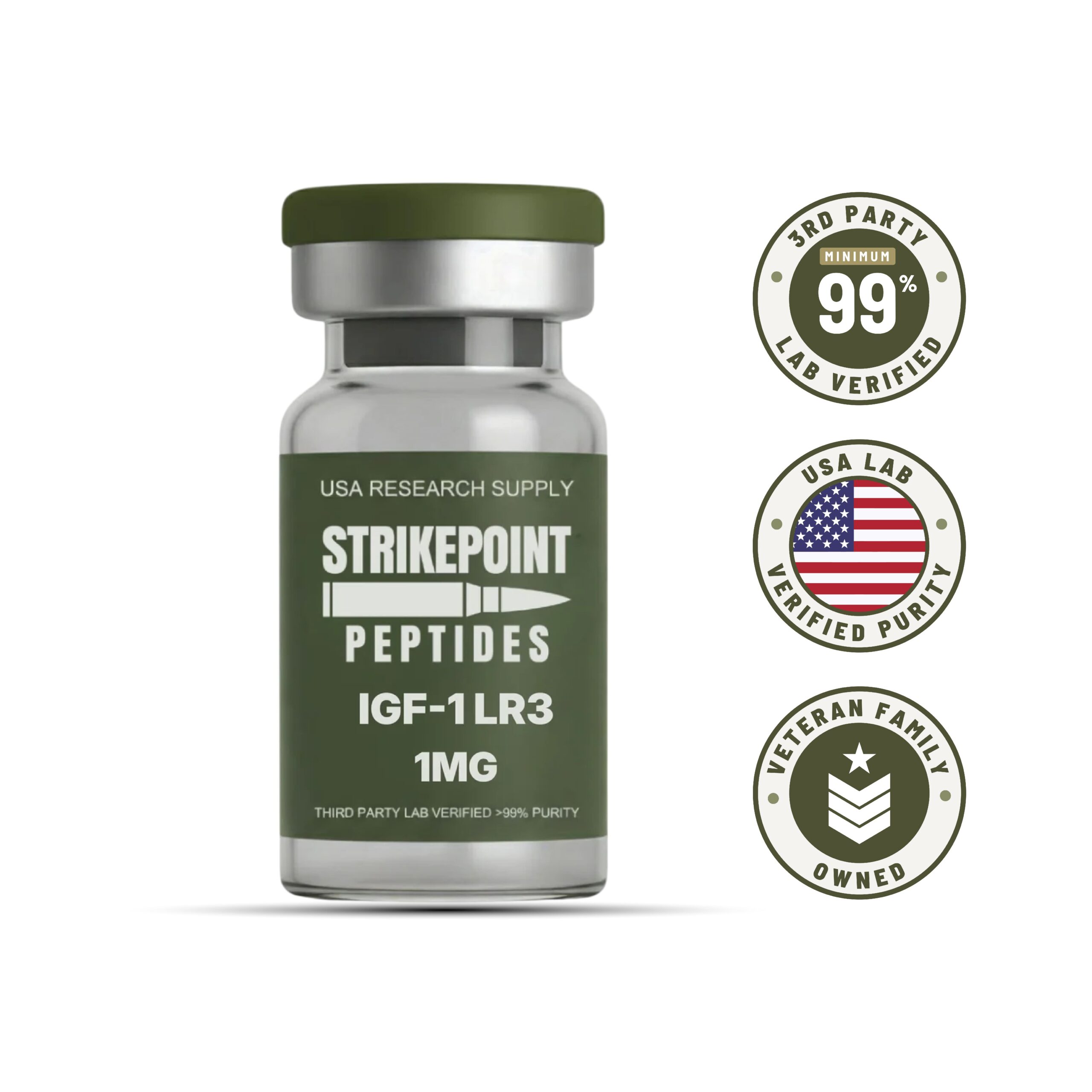
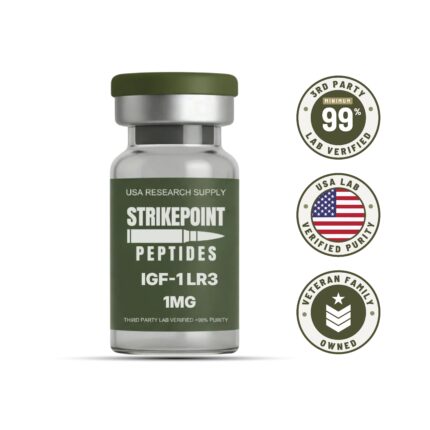
IGF-1 LR3

15 BOUGHT IN LAST 24H

Original price was: $67.00.Current price is: $53.60.

Veteran Support
Mission Driven
Same-Day
Shipping
Third-Party
Tested
Secure
Checkout
SCIENTIFIC SPECIFICATIONS
Molecular Formula
C₄₀₀H₆₂₅N₁₁₁O₁₁₅S₉
CAS
946870-92-4
Molar Mass
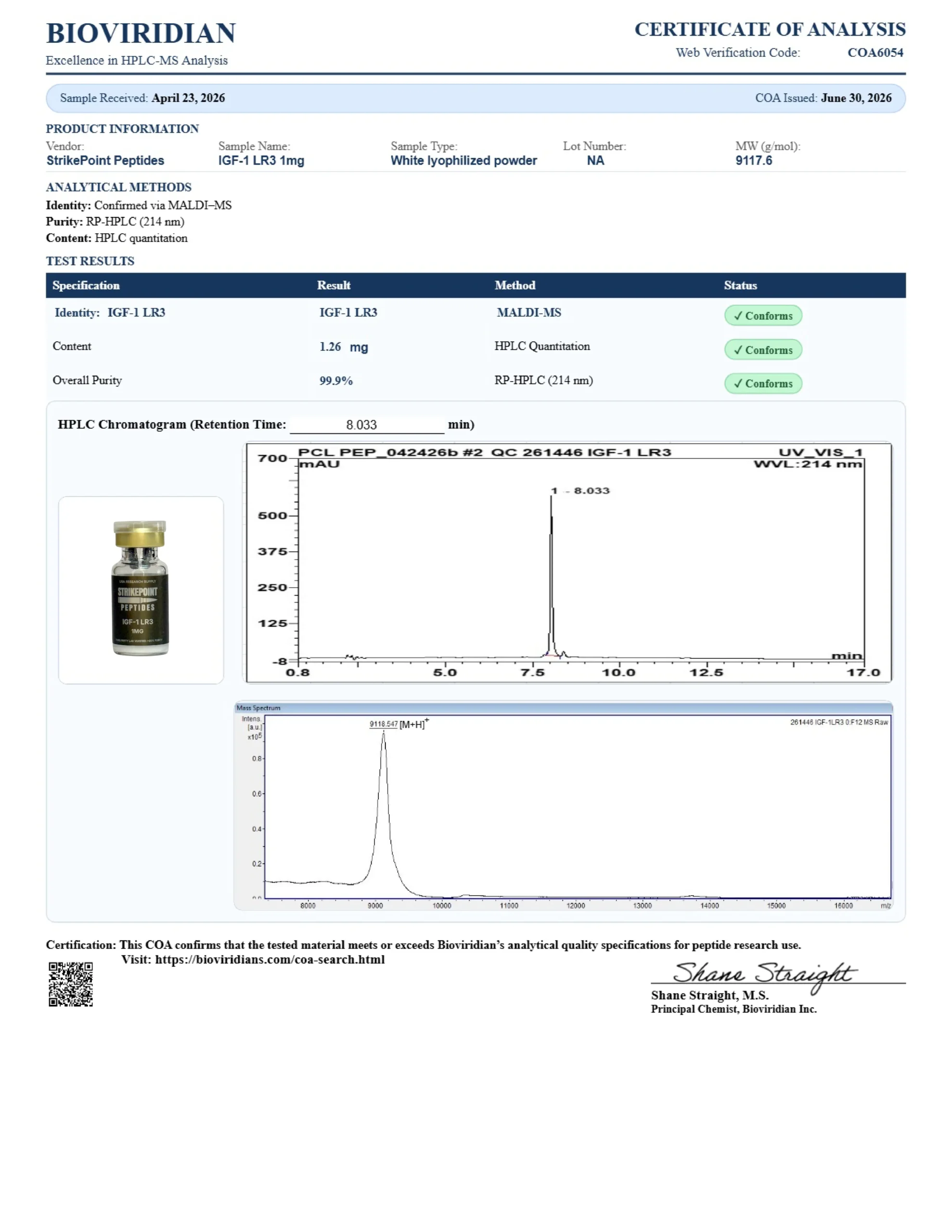
9117.5 g/mol
Amino Acid Sequence
Synonyms
Solubility
Form
Research Use Only
● VERIFIED ANALYSIS

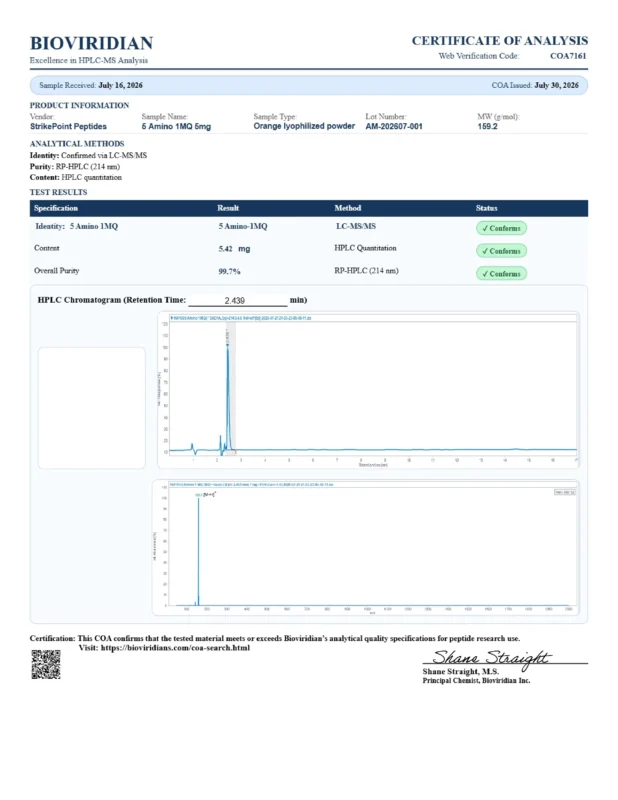
Third-Party Lab Results

Transparency is our priority. Download the full HPLC and Mass Spectrometry reports for the current batch #88291. Tested on Oct 24, 2023.

DOWNLOAD FULL REPORT (PDF)
PDF
HPLC_BPC157_Batch88291.pdf
Verified by Janoshik
PDF
MS_BPC157_Batch88291.pdf
Verified by Janoshik
Research Overview

IGF-1 LR3 (Insulin-like Growth Factor-1 Long R3) is a synthetic, extended-acting analogue of native IGF-1 designed for research use in models of cell growth, tissue adaptation, and metabolic signaling. Structurally modified to reduce binding to IGF-binding proteins, IGF-1 LR3 may remain bioactive significantly longer than unmodified IGF-1 under experimental conditions, allowing for sustained receptor engagement and downstream pathway analysis.

In preclinical and in vitro systems, IGF-1 LR3 is commonly used to explore mechanisms of cell proliferation and differentiation, myostatin-related signaling in muscle biology, and metabolic processes involving glucose handling and lipid mobilization. IGF-1 LR3 supplied for research is not intended for human or veterinary use and should only be handled by qualified professionals in controlled laboratory environments.

IGF-1 LR3 is a recombinant peptide derivative of insulin-like growth factor-1 with a modified sequence that includes an arginine substitution at position 3 and an extended N-terminus. These changes are associated with reduced affinity for IGF-binding proteins and a prolonged active duration in experimental models.

Key areas of interest include:

  • Cell proliferation and differentiation in multiple tissue types
  • Muscle biology, including satellite cell behavior and myostatin-related pathways
  • Metabolic signaling, particularly IGF-1R and insulin receptor cross-talk
  • Tissue maintenance and repair models in long-term aging and glucocorticoid-exposure paradigms

By offering a prolonged IGF-1–like signal, IGF-1 LR3 enables researchers to investigate sustained pathway activation and long-term cellular responses in a more controlled way than with short-lived native IGF-1.

Storage & Handling

All peptides are supplied as sterile, lyophilized powder and are stable when handled correctly.

  • On arrival: Store vials in a cool, dry place away from heat and direct sunlight.
  • Long-term (powder): For optimal longevity, keep lyophilized peptides refrigerated to help maintain integrity.
  • After reconstitution: Use an appropriate research diluent (for example, BAC water). Store the reconstituted solution in the refrigerator and use within 20–30 days for best stability.

Note: Minimize exposure to moisture and repeated freeze–thaw cycles. Follow your institution's safety procedures when handling research materials.

FAQ 

Q1: What is IGF-1 LR3 used for in research?
A1: IGF-1 LR3 is used to study cell proliferation and differentiation, muscle biology, metabolic signaling, and tissue-maintenance pathways. Its extended activity profile makes it suitable for experiments that require prolonged IGF-1–type signaling.

Q2: How is IGF-1 LR3 different from native IGF-1?
A2:
IGF-1 LR3 contains sequence modifications that reduce its binding to IGF-binding proteins and extend its functional duration in experimental models. As a result, it generally remains active longer than native IGF-1 under comparable conditions.

Q3: Does IGF-1 LR3 cause muscle hypertrophy in research models?
A3: Research typically characterizes IGF-1 and its analogues, including IGF-1 LR3, as supporting hyperplasia (increased cell number) rather than direct hypertrophy (increased cell size). It is used to study muscle-cell proliferation, differentiation, and myostatin-related signaling, not as a defined hypertrophic agent.

Q4: Is IGF-1 LR3 being studied in metabolic and glucose-related models?
A4: Yes. IGF-1 LR3 is used to investigate how IGF-1/insulin receptor signaling affects glucose uptake, lipid mobilization, and energy balance in controlled laboratory systems, including models relevant to insulin resistance and glucocorticoid exposure.

Q5: Is IGF-1 LR3 intended for human consumption or performance enhancement?
A5:
No. IGF-1 LR3 supplied by research vendors is labeled for laboratory research use only. It is not approved, marketed, or intended for human or veterinary consumption, performance enhancement, or any therapeutic application.

i
Research Use Only: This product is intended for laboratory research use only and is not for human consumption, diagnostic, or therapeutic use.

Researcher Reviews

Reviews

There are no reviews yet.

Be the first to review “IGF-1 LR3”

Your email address will not be published. Required fields are marked *