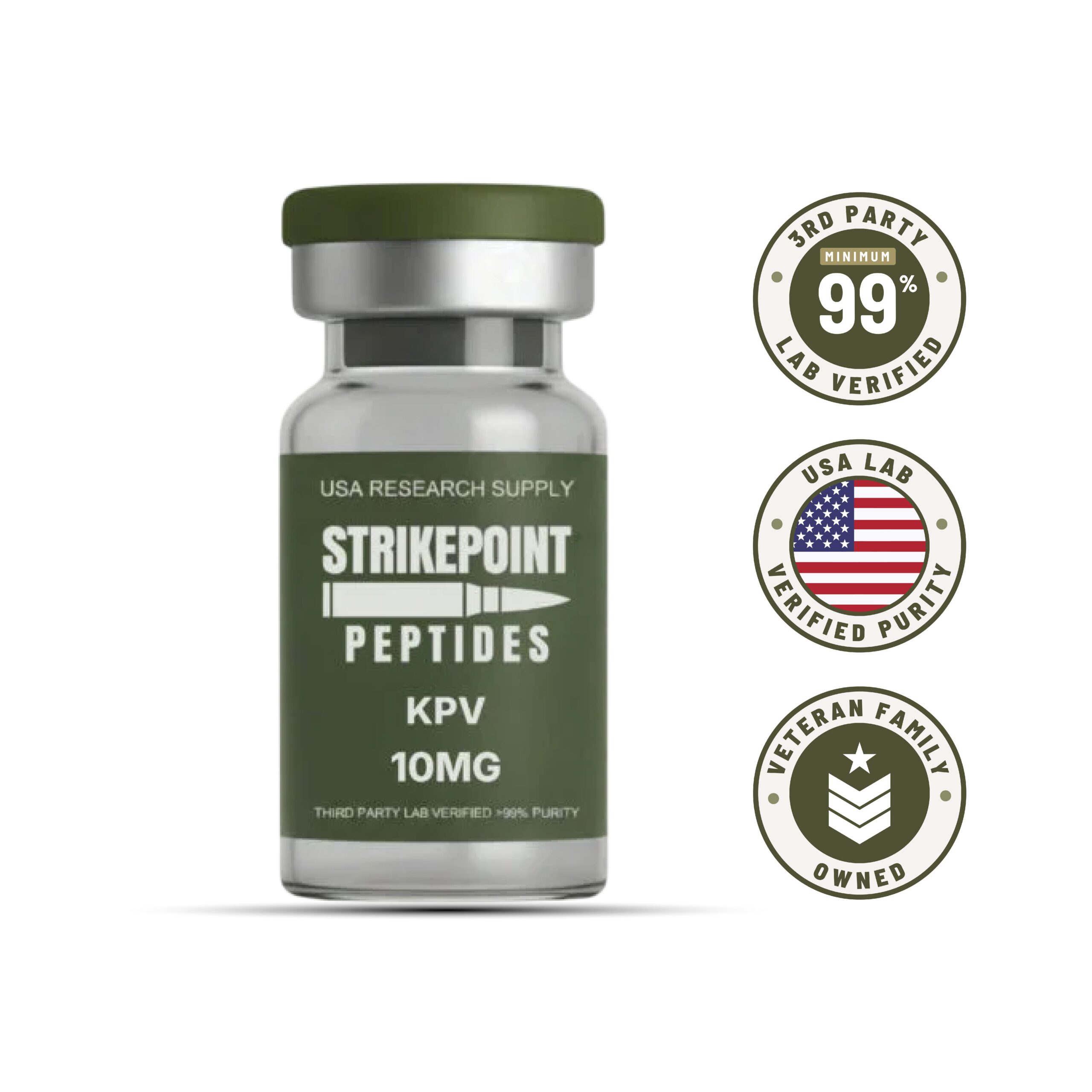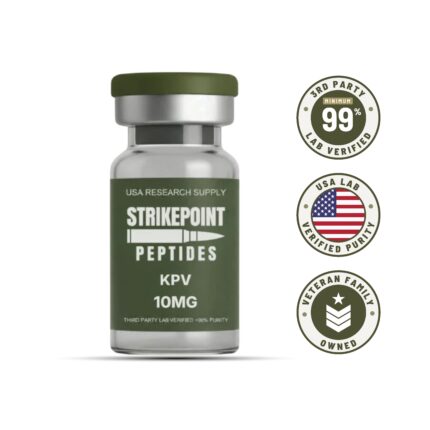
KPV
$35.00 – $44.00Price range: $35.00 through $44.00
Shipping
Tested
Checkout
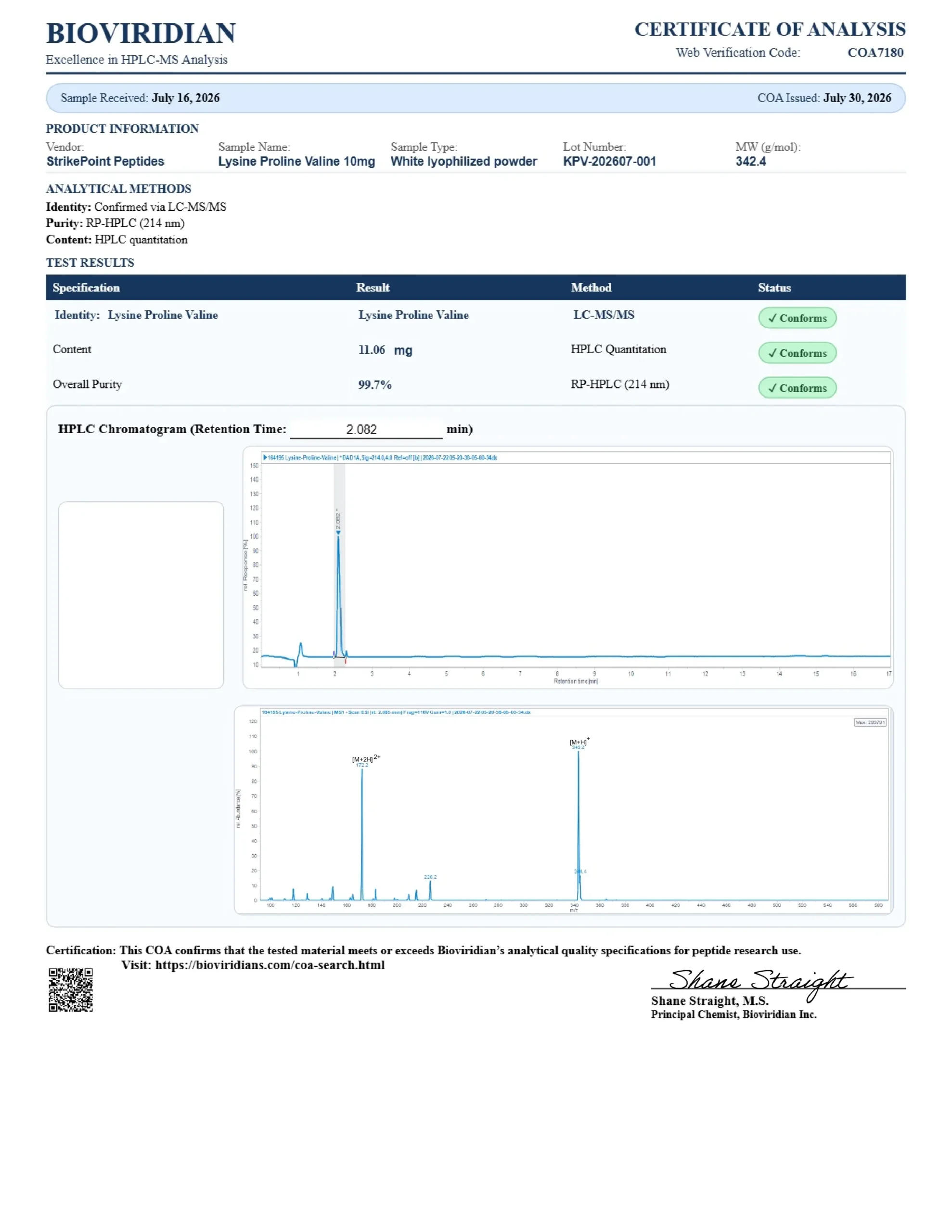
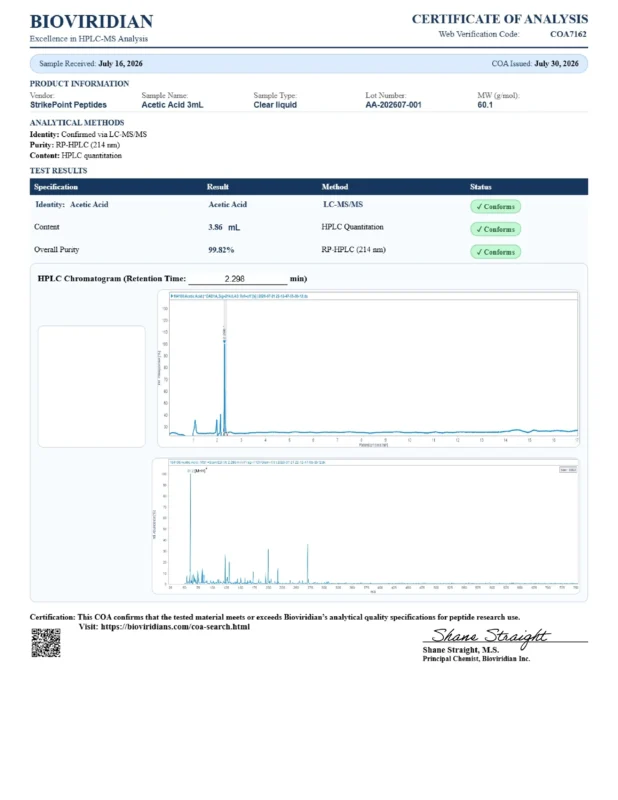
Third-Party Lab Results
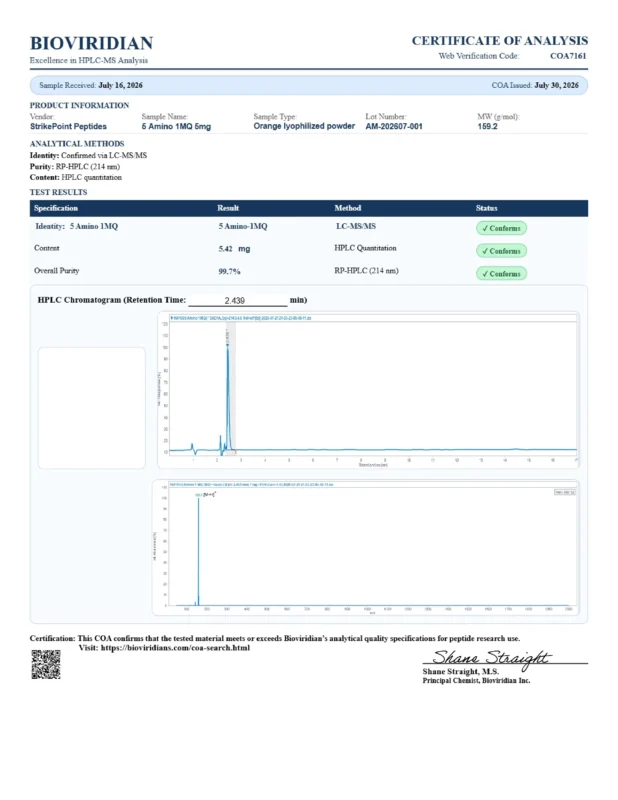
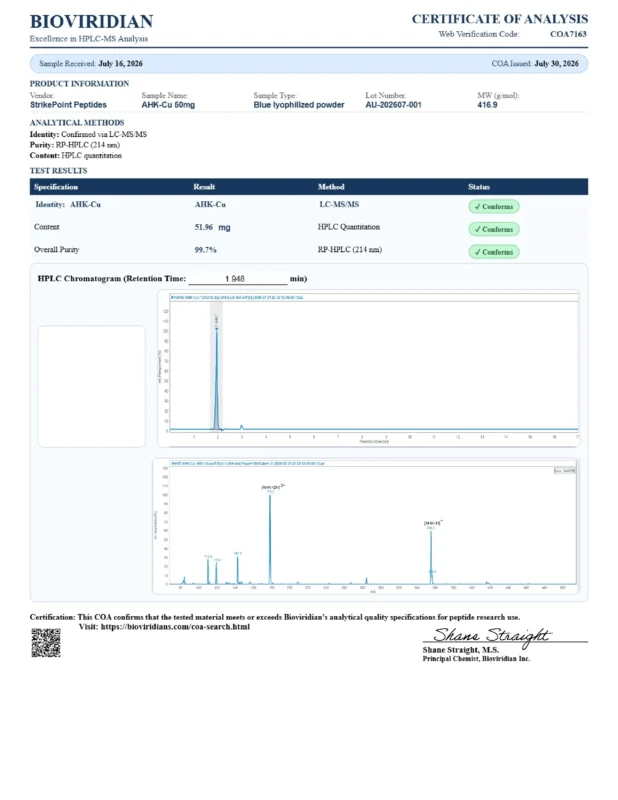
Transparency is our priority. Download the full HPLC and Mass Spectrometry reports for the current batch #88291. Tested on Oct 24, 2023.
DOWNLOAD FULL REPORT (PDF)Lysine-Proline-Valine (KPV) is a short tripeptide fragment derived from the C-terminal region of α-melanocyte-stimulating hormone (α-MSH). In experimental systems, KPV is widely studied for its role in modulating cellular responses to environmental stressors, particularly in epithelial and skin-model research. Laboratory data suggest that KPV can influence oxidative-stress pathways, inflammatory signaling, and programmed cell death in keratinocyte models exposed to external insults such as particulate matter.
KPV supplied for research is intended exclusively for laboratory investigation by qualified professionals. It is not approved as a therapeutic, cosmetic, or over-the-counter product and must not be used for human or veterinary administration.
KPV is a naturally occurring peptide sequence (Lys-Pro-Val) derived from α-MSH, a regulatory hormone involved in multiple cell-signaling pathways. Because of its compact size and origin from a well-characterized parent peptide, KPV is frequently used to explore:
- How cells respond to oxidative and inflammatory stress
- The interplay between reactive oxygen species (ROS) and intracellular signaling cascades
- Mechanisms of cell survival, apoptosis, and pyroptosis in barrier tissues such as skin
In keratinocyte studies, KPV has been evaluated under conditions simulating exposure to airborne particulates (e.g., PM10) to better understand how environmental factors may impact skin cells and how specific peptides can modulate downstream signaling and cell-fate decisions.
All peptides are supplied as sterile, lyophilized powder and are stable when handled correctly.
- On arrival: Store vials in a cool, dry place away from heat and direct sunlight.
- Long-term (powder): For optimal longevity, keep lyophilized peptides refrigerated to help maintain integrity.
- After reconstitution: Use an appropriate research diluent (for example, BAC water). Store the reconstituted solution in the refrigerator and use within 20–30 days for best stability.
Note: Minimize exposure to moisture and repeated freeze–thaw cycles. Follow your institution's safety procedures when handling research materials.
- Q1: What is Lysine-Proline-Valine (KPV) used for in research?
A1: KPV is primarily used to study cellular responses to oxidative and inflammatory stress, especially in keratinocyte and skin-model systems. Researchers investigate how KPV influences ROS production, inflammatory mediators, and cell-fate pathways such as apoptosis and pyroptosis under controlled conditions.Q2: Does KPV protect human skin from pollution in real-world use?
A2: Current findings for KPV come from in vitro and model-system research. While these studies provide mechanistic insight, they do not establish proven protective effects in real-world human use. KPV supplied by research vendors is not approved as a therapeutic or cosmetic product.Q3: Is KPV considered a cosmetic ingredient or skincare active?
A3: In this context, KPV is supplied as a research peptide for laboratory investigation only. Any potential cosmetic or skincare applications remain speculative and would require extensive safety, regulatory, and clinical evaluation before practical use.Q4: How is KPV typically studied in the laboratory?
A4: KPV is commonly examined in cultured keratinocytes (such as HaCaT cells) and occasionally in 3D reconstructed skin models. It is usually applied at defined concentrations, with researchers monitoring endpoints like ROS levels, IL-1β secretion, caspase activation, and markers of cell viability and death.Q5: Can KPV be used for self-treatment or topical application?
A5: No. KPV offered for research purposes is not intended for self-use, clinical application, or over-the-counter topical products. It must only be handled by qualified professionals within appropriate research facilities.
Researcher Reviews
Frequently Bought Together
5-amino-1mq 5MG
ACE-031


Reviews
There are no reviews yet.