Back to products
GHRP-2 Acetate
GHRP-2 Acetate Price range: $17.60 through $25.60

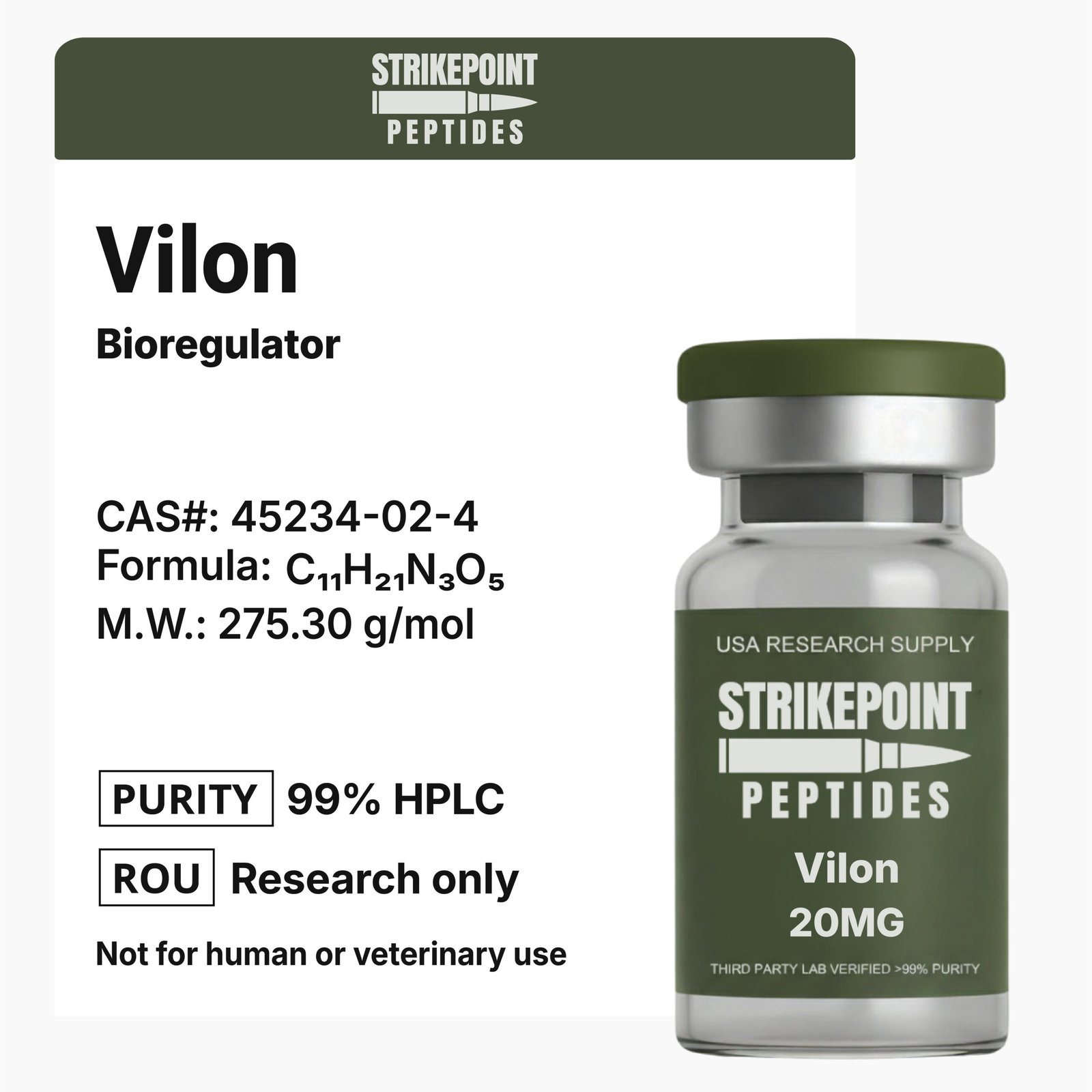
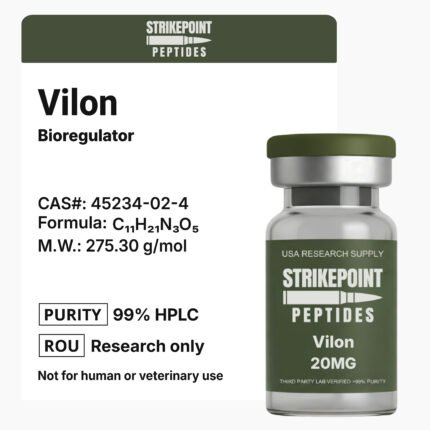
Vilon 20mg

15 BOUGHT IN LAST 24H
Veteran Support
Mission Driven
Same-Day
Shipping
Third-Party
Tested
Secure
Checkout
SCIENTIFIC SPECIFICATIONS
Molecular Formula
C11H21N3O5
CAS
45234-02-4
Molar Mass
275.30 g/mol
Amino Acid Sequence
Peptide/sequence not publicly disclosed
Synonyms
Not available
Solubility
Not specified
Form
Lyophilized powder
Research Use Only
● VERIFIED ANALYSIS

Third-Party Lab Results

Transparency is our priority. Download the full HPLC and Mass Spectrometry reports for the current batch #88291. Tested on Oct 24, 2023.

DOWNLOAD FULL REPORT (PDF)
PDF
HPLC_BPC157_Batch88291.pdf
Verified by Janoshik
PDF
MS_BPC157_Batch88291.pdf
Verified by Janoshik
Description

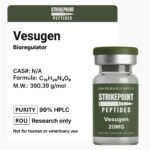
Vilon 20mg is a synthetic dipeptide (Lys-Glu) originally characterized as a thymus-derived regulatory peptide. It is widely cited in the peptide-bioregulator literature as a modulator of immune and reparative processes, and is supplied here for in vitro and pre-clinical studies on immune aging and tissue regeneration.
Research Focus (Pre-clinical/Experimental)
Thymic and Immune Modulation
Vilon has been reported to influence differentiation and functional activity of T-lymphocytes in aged animals, with observations of more “youthful” thymic morphology and improved cell-mediated immune responses in experimental gerontological studies.
Gene Expression and Longevity Models
Thymic bioregulator peptides like Vilon have been linked to changes in expression of genes involved in cell cycle control, DNA repair, and stress responses. Some long-term animal experiments from peptide-gerontology groups report increased median and maximum lifespan when such peptides are administered in specific age windows, though these findings remain niche and are not widely replicated yet.
Tissue Repair and Inflammation
In cell and animal models of injury, Vilon has been examined for its capacity to modulate inflammatory cytokine profiles and support reparative cell populations, making it useful as a tool compound in studies of immune-mediated tissue repair.
Research-Use Only: Vilon 20mg is designated strictly for laboratory experimentation by qualified professionals and must not be used as a drug, supplement, or cosmetic ingredient in humans or animals.

Overview

Chemical Identity & Classification

  • Synthetic dipeptide (Lys–Glu)
  • Thymic-derived peptide bioregulator (research classification)
  • Gene expression and cellular regulation research compound

Why Researchers Study Vilon

  • To investigate peptide-mediated control of gene transcription
  • To study chromatin structure modulation and protein synthesis regulation
  • To explore regulatory mechanisms linked to tissue differentiation and aging

Key Research Systems & Pathways

  • Chromatin organization and transcriptional regulation
  • Protein synthesis and translational control pathways
  • Cell cycle regulation and cellular homeostasis
  • Peptide-driven bioregulation of differentiation-associated genes

Vilon is prepared under controlled laboratory conditions to ensure consistency, purity, and reproducibility for preclinical research applications.

Research

Mechanism of Action & Pathways

In experimental models, Vilon is studied for its influence on nuclear regulatory mechanisms, including modulation of chromatin accessibility and gene expression programs. Research focuses on how short peptide bioregulators affect transcriptional balance, cell cycle progression, and intracellular signaling integration.


Cellular & Molecular Research

Vilon is commonly utilized in laboratory studies examining:

  • Regulation of chromatin structure and gene accessibility
  • Protein synthesis and translational efficiency
  • Cell cycle–associated gene expression profiles
    All investigations are conducted in controlled in vitro or biochemical assay environments.


Differentiation & Aging Research

Research applications may include:

  • Tissue differentiation signaling models
  • Peptide-mediated regulation of cellular aging markers
  • Bioregulatory peptide networks in developmental systems
    These investigations remain exploratory and mechanistic, without therapeutic interpretation.


Experimental Models

  • In vitro cellular and molecular assays
  • Ex vivo tissue-based gene expression studies
  • Non-clinical in vivo preclinical research models

All use is strictly limited to laboratory research contexts.

FAQ

What is Vilon used for in research?
Vilon is used in laboratory research to study peptide-mediated gene expression regulation, chromatin dynamics, and cell cycle homeostasis.

What is the peptide composition of Vilon?
Vilon is composed of the dipeptide sequence Lysine–Glutamic acid (Lys–Glu).

Which biological processes are commonly studied with Vilon?
Research focuses on transcriptional regulation, protein synthesis, cellular differentiation, and aging-associated pathways.

Is Vilon approved for human or clinical use?
No. Vilon is strictly for research use only and is not intended for human consumption, veterinary use, or clinical application.

How should Vilon be stored and handled?
Vilon should be stored and handled according to standard laboratory peptide storage and handling practices to maintain stability and integrity.

i
Research Use Only: This product is intended for laboratory research use only and is not for human consumption, diagnostic, or therapeutic use.

Researcher Reviews