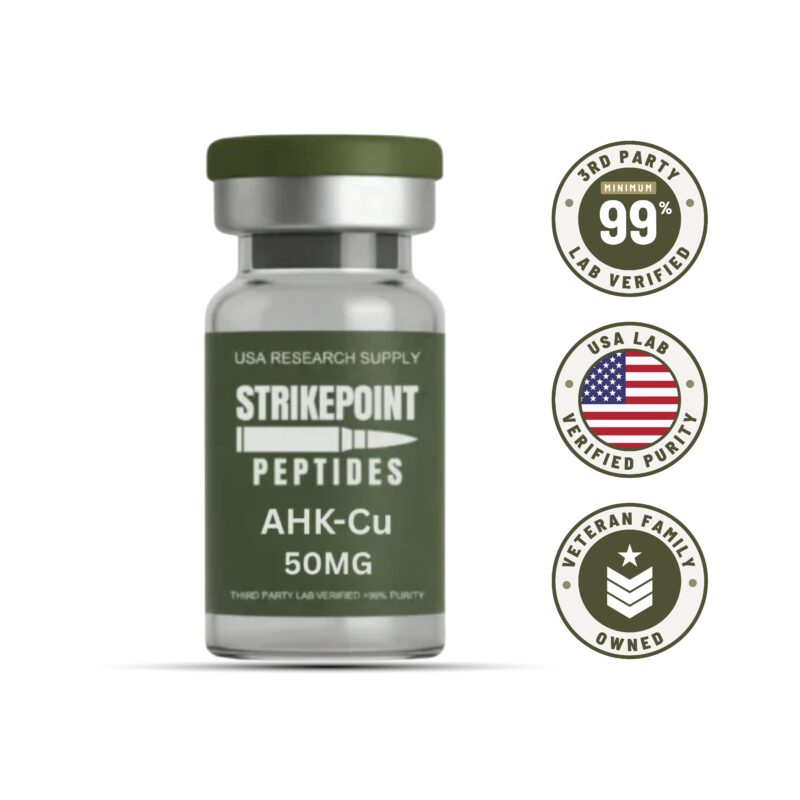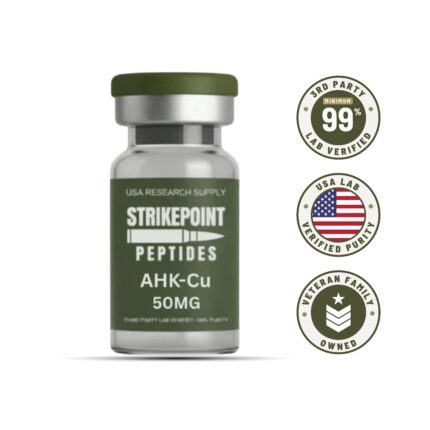
AHK-Cu Peptide
$45.00 – $78.00Price range: $45.00 through $78.00
Shipping
Tested
Checkout
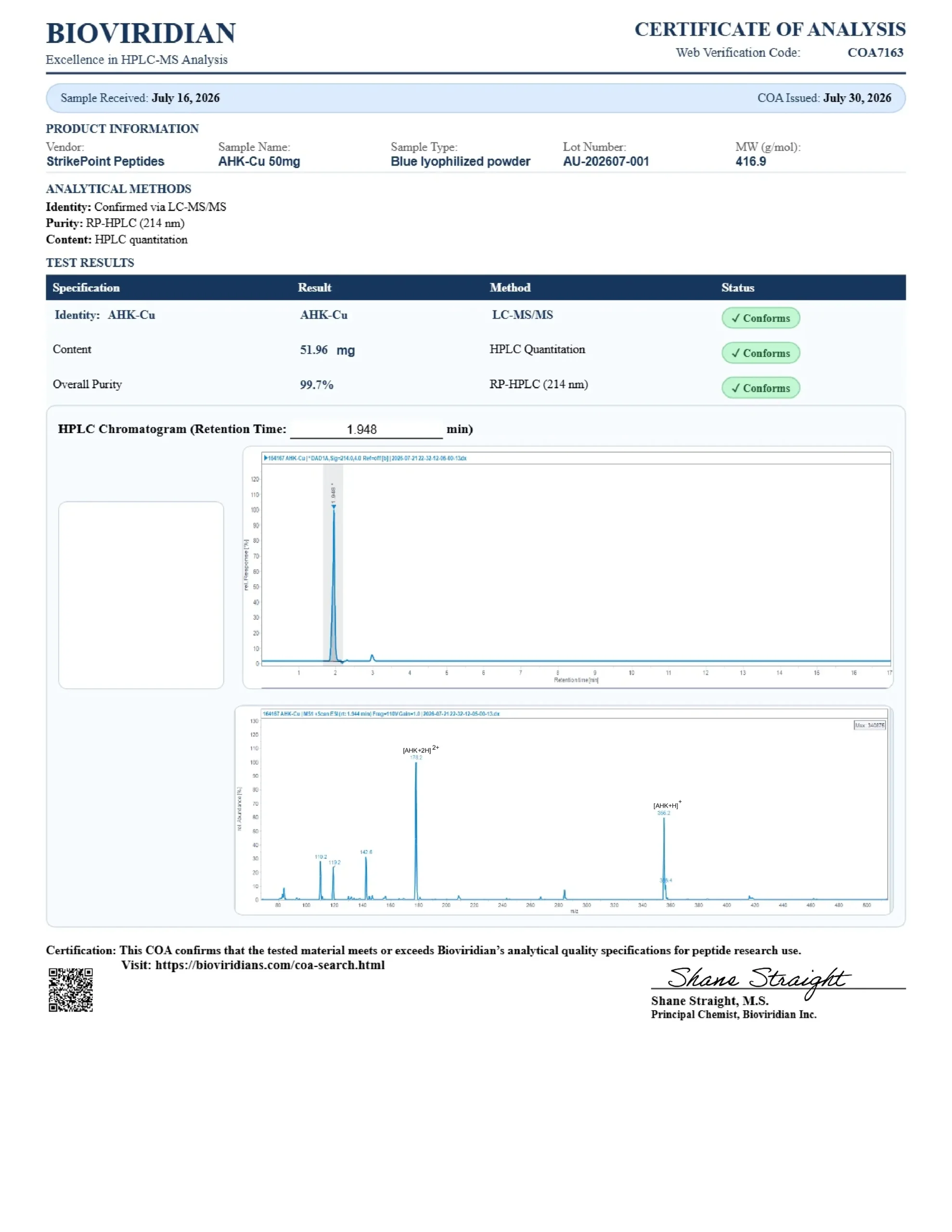
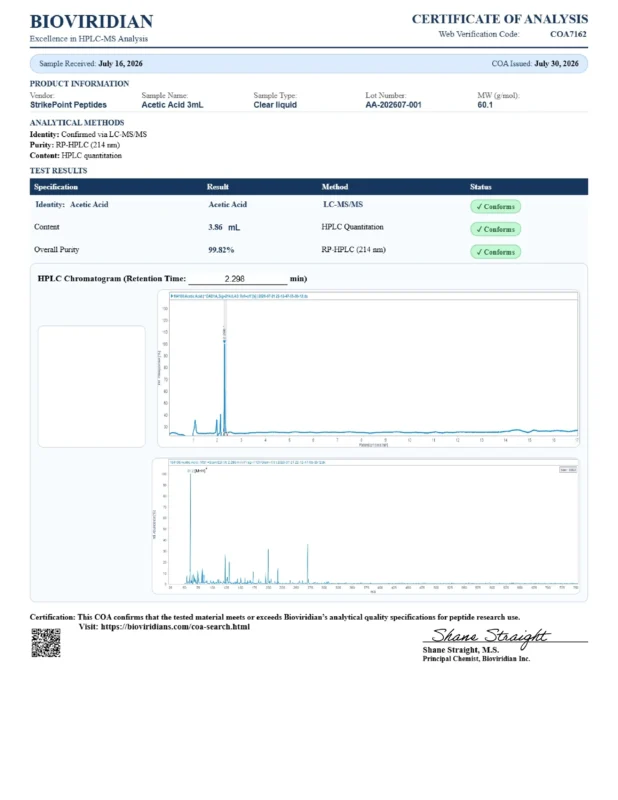
Third-Party Lab Results
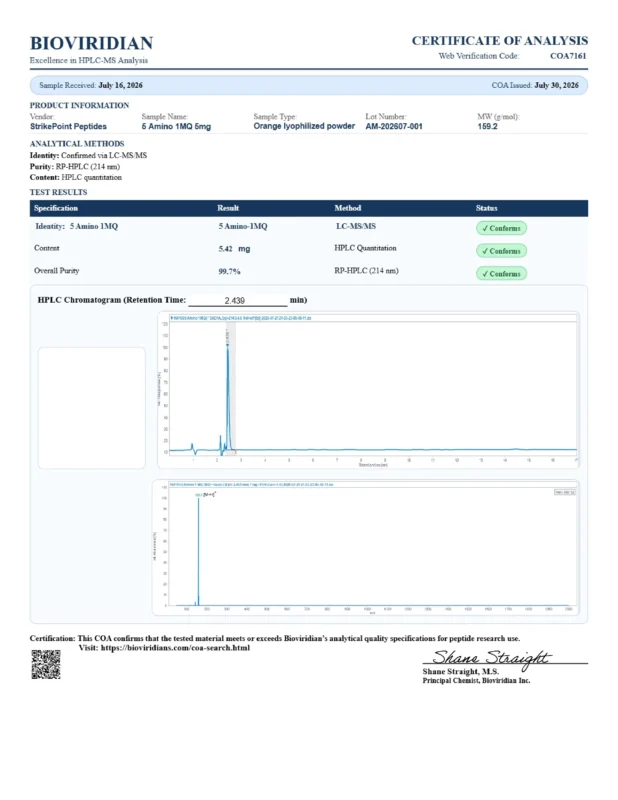
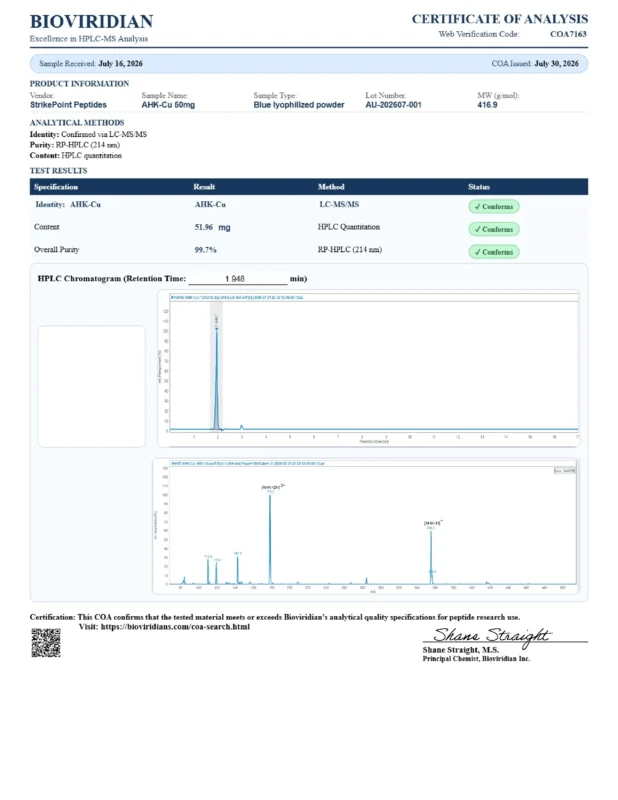
Transparency is our priority. Download the full HPLC and Mass Spectrometry reports for the current batch #88291. Tested on Oct 24, 2023.
DOWNLOAD FULL REPORT (PDF)AHK-Cu Peptide Details
AHK-Cu (Copper Tripeptide) is a synthetic metallopeptide composed of the amino acid sequence Alanine–Histidine–Lysine complexed with copper ions. This copper-associated peptide is utilized in laboratory investigations focused on vascular signaling, extracellular matrix regulation, and fibroblast-associated cellular processes under controlled experimental conditions.
AHK-Cu is studied for its involvement in copper-dependent biochemical signaling and its interaction with pathways associated with vascular endothelial growth factor (VEGF), extracellular matrix organization, and connective tissue dynamics. Experimental research explores how the peptide–metal complex may influence angiogenic signaling environments, dermal cellular communication, and follicular-associated molecular pathways.
Researchers also investigate AHK-Cu in relation to fibroblast signaling and growth factor–associated molecular regulation. Fibroblasts are widely studied due to their relevance in extracellular matrix structure and collagen-associated processes. The peptide is frequently examined in models evaluating collagen-related signaling, elastin-associated pathways, and redox-sensitive cellular regulation.
In follicular biology research, AHK-Cu is explored in experimental systems studying vascular support signaling, growth cycle regulation, and androgen-associated receptor pathways. Studies may also evaluate molecular responses linked to angiogenesis and extracellular matrix maintenance within follicular microenvironments.
AHK-Cu 50mg topical formulation is supplied strictly for scientific and laboratory research use only. It is not intended for human consumption, veterinary use, diagnostic procedures, or clinical application.
About AHK-Cu peptide
Chemical Identity & Classification
- Copper-complexed synthetic tripeptide
- Amino acid sequence: Alanine–Histidine–Lysine with copper ions
- Classified as a metallopeptide research compound
- Total content: 100mg topical research formulation
Why Researchers Study AHK-Cu
- To investigate VEGF-associated angiogenic signaling
- To examine extracellular matrix and fibroblast regulation
- To study collagen- and elastin-associated molecular pathways
- To explore follicular biology and vascular microenvironment signaling
Key Research Systems & Pathways
- VEGF and angiogenesis-associated pathways
- Fibroblast signaling and extracellular matrix dynamics
- Copper-dependent enzymatic and metalloprotein activity
- Collagen and elastin regulatory signaling systems
- Redox-sensitive cellular communication pathways
The formulation is prepared under controlled laboratory standards to support reproducibility and mechanistic investigation.
AHK-Cu peptide Scientific Research
Mechanism of Action & Pathways
AHK-Cu is utilized in laboratory research to examine copper-mediated peptide signaling and its interaction with vascular and extracellular matrix pathways. Experimental models investigate the peptide’s involvement in VEGF-associated signaling cascades, fibroblast communication systems, and angiogenic regulatory processes.
The copper ion component is studied as a cofactor within metalloprotein and enzyme systems associated with connective tissue dynamics and redox-sensitive molecular signaling. Researchers also examine interactions between AHK-Cu and pathways linked to extracellular matrix organization and dermal structural regulation.
Cellular & Molecular Research
The peptide is commonly studied in laboratory settings involving:
- VEGF-associated vascular signaling studies
- Fibroblast activation and growth factor pathway investigations
- Collagen and elastin regulatory signaling models
- Copper-dependent metalloprotein and enzymatic activity research
- Peptide–metal interaction dynamics affecting cellular communication
All investigations are conducted in controlled in vitro or biochemical assay environments.
Follicular & Dermal Research
Research applications may include:
- Follicular growth cycle signaling investigations
- Vascular support pathway studies within follicular microenvironments
- Dermal extracellular matrix remodeling models
- Angiogenesis-associated molecular pathway research
- Connective tissue and fibroblast signaling systems
These studies remain exploratory, mechanistic, and non-clinical in nature.
Experimental Models
- In vitro molecular and cellular assays
- Ex vivo tissue-based signaling studies
- Non-clinical preclinical investigative models
All applications are strictly limited to scientific and laboratory research environments.
AHK-Cu peptide FAQ
1. What is AHK-Cu used for in research?
AHK-Cu is used in laboratory research to study VEGF-associated signaling, extracellular matrix regulation, fibroblast activity, angiogenic pathways, and follicular biology mechanisms.
2. What is AHK-Cu composed of?
AHK-Cu consists of the tripeptide Alanine–Histidine–Lysine complexed with copper ions as a metallopeptide research formulation.
3. Which pathways are commonly studied with AHK-Cu?
Research commonly focuses on VEGF signaling, angiogenesis-related pathways, extracellular matrix remodeling, fibroblast regulation, collagen-associated signaling, and copper-dependent molecular processes.
4. Is AHK-Cu approved for human or clinical use?
No. AHK-Cu is strictly intended for laboratory research use only and is not approved for human consumption, veterinary use, or clinical application.
5. How should AHK-Cu be stored and handled?
AHK-Cu should be stored and handled according to standard laboratory peptide and chemical handling procedures to maintain formulation stability and integrity.
Researcher Reviews
Frequently Bought Together
5-amino-1mq 5MG
$28.40 – $40.00Price range: $28.40 through $40.00ACE-031
Acetic Acid 0.6%
$12.00 – $16.00Price range: $12.00 through $16.00


Reviews
There are no reviews yet.