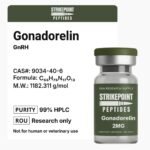
Gonadorelin Acetate
Gonadorelin Acetate Original price was: $28.00.Current price is: $22.40.
Back to products
HGH Fragment 176-191
HGH Fragment 176-191 Price range: $22.40 through $57.60

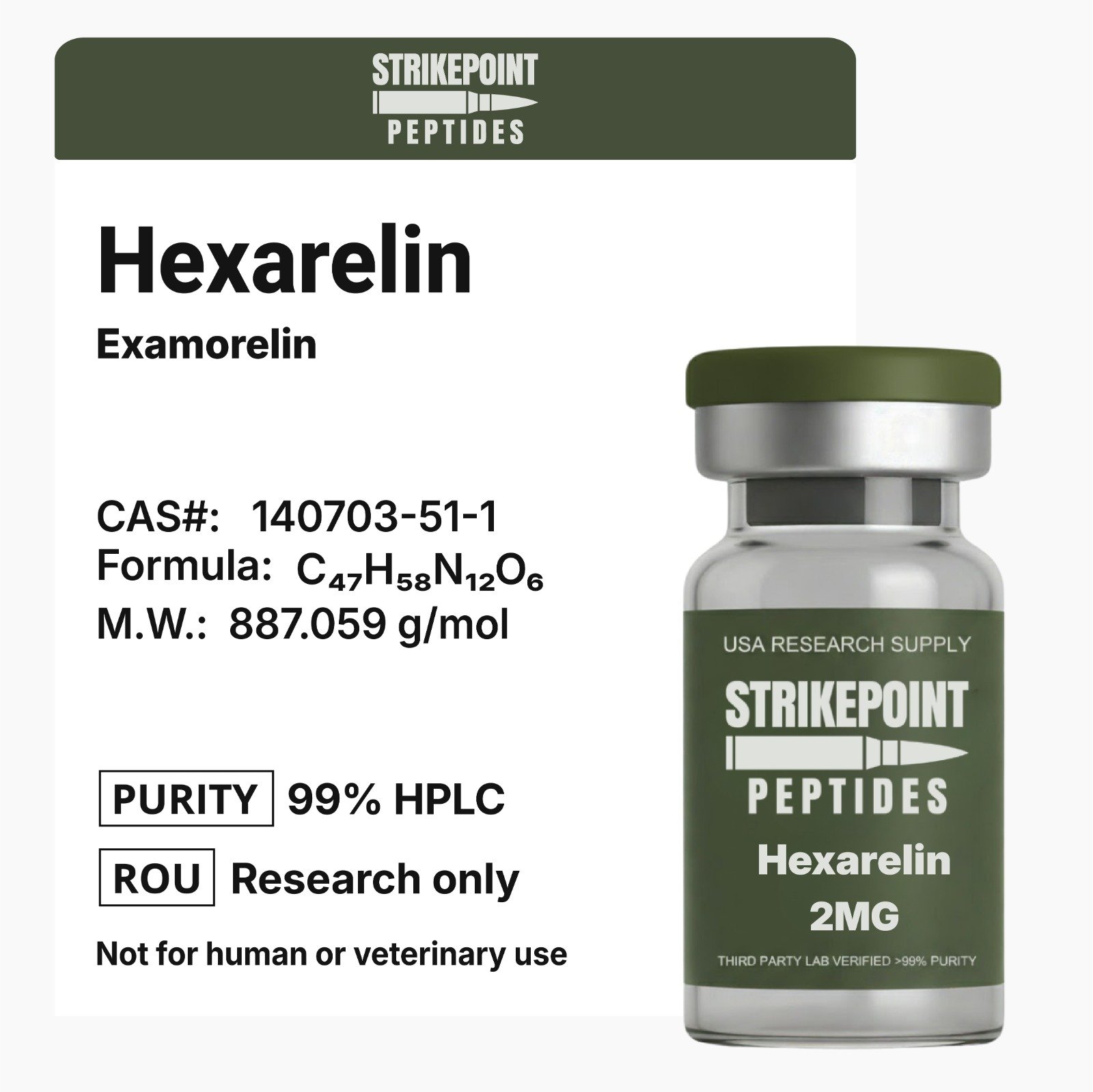
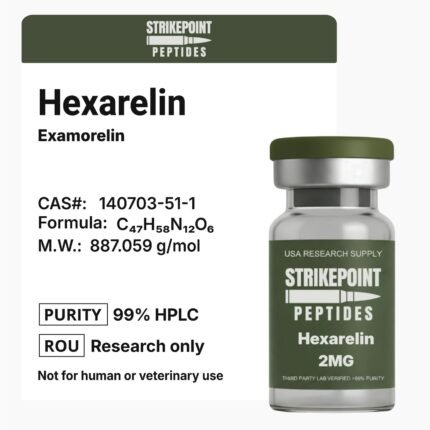
Hexarelin

15 BOUGHT IN LAST 24H

Original price was: $34.00.Current price is: $27.20.

Out of stock

Veteran Support
Mission Driven
Same-Day
Shipping
Third-Party
Tested
Secure
Checkout
SCIENTIFIC SPECIFICATIONS
Molecular Formula
C₄₇H₅₈N₁₂O₆
CAS
140703-51-1
Molar Mass
887.059 g/mol
Amino Acid Sequence
Peptide compound (sequence not disclosed)
Synonyms
Research peptide / experimental compound
Solubility
Water soluble
Form
Lyophilized powder
Research Use Only
● VERIFIED ANALYSIS

Third-Party Lab Results

Transparency is our priority. Download the full HPLC and Mass Spectrometry reports for the current batch #88291. Tested on Oct 24, 2023.

DOWNLOAD FULL REPORT (PDF)
PDF
HPLC_BPC157_Batch88291.pdf
Verified by Janoshik
PDF
MS_BPC157_Batch88291.pdf
Verified by Janoshik
Description

Hexarelin is a synthetic hexapeptide growth hormone secretagogue (GHS) and a potent agonist of the growth hormone secretagogue receptor (GHS-R1a), also known as the ghrelin receptor. In laboratory research settings, Hexarelin is utilized as a molecular probe for investigating somatotropic signaling, ghrelin receptor pharmacology, and peptide-mediated endocrine and paracrine communication.

In preclinical experimental models, Hexarelin activates Gq protein–coupled phospholipase C (PLC) signaling, leading to intracellular calcium mobilization and downstream transcriptional responses associated with growth hormone regulatory pathways. In addition to its role in somatotropic signaling, Hexarelin has been examined in non-clinical systems for growth hormone–independent mechanisms, including peptide-mediated signaling in cardiovascular, skeletal muscle, and metabolic research models.

Hexarelin is supplied exclusively for scientific and laboratory research use. It is not intended for human or veterinary consumption, clinical investigation, diagnostic use, or therapeutic application.

Overview

Chemical Identity & Classification

  • Synthetic hexapeptide
  • Growth hormone secretagogue (GHS)
  • GHS-R1a (ghrelin receptor) agonist

Why Researchers Study Hexarelin

  • To investigate ghrelin receptor activation and signaling specificity
  • To study somatotropic axis regulation in experimental systems
  • To explore peptide-mediated cardiovascular and metabolic signaling independent of GH release

Key Research Systems & Pathways

  • GHS-R1a receptor signaling
  • Gq/PLC-dependent calcium signaling
  • Hypothalamic–pituitary axis regulation
  • Cardiovascular peptide signaling pathways
  • Skeletal muscle and lipid metabolism signaling networks

Hexarelin is synthesized under controlled laboratory conditions to ensure high purity, molecular integrity, and reproducibility for preclinical research environments.

Research

Mechanism of Action & Pathways

In experimental research models, Hexarelin binds to the ghrelin receptor, activating PLC-mediated intracellular calcium signaling. These pathways are studied to understand receptor activation kinetics, downstream transcriptional regulation, and signal integration within somatotropic and non-somatotropic biological systems.


Cellular & Molecular Research

Hexarelin is commonly utilized in laboratory studies examining:

  • GHS-R1a receptor binding affinity and signaling dynamics
  • Calcium-dependent intracellular signaling responses
  • Receptor desensitization and signaling bias
    All investigations are conducted in controlled in vitro or biochemical assay environments.


Cardiovascular, Musculoskeletal & Metabolic Research

Research applications may include:

  • Myocardial signaling models under ischemic or stress-related conditions
  • Skeletal muscle preservation and metabolic signaling studies
  • Lipid metabolism and endocrine–paracrine pathway investigations
    These studies remain exploratory and mechanistic, without therapeutic interpretation.


Experimental Models

  • In vitro receptor-binding and signaling assays
  • Ex vivo cardiac, muscle, or metabolic tissue studies
  • Non-clinical in vivo preclinical research models

All use is strictly limited to laboratory research contexts.

FAQ 

What is Hexarelin used for in research?
Hexarelin is used in laboratory research to study ghrelin receptor signaling, somatotropic axis regulation, and peptide-mediated cardiovascular and metabolic pathways.

What is the primary mechanism of interest for Hexarelin?
It is studied for its activation of GHS-R1a and downstream Gq/PLC-dependent calcium signaling pathways.

Does Hexarelin act only through growth hormone pathways?
No. Preclinical research also examines growth hormone–independent signaling mechanisms in cardiovascular, muscle, and metabolic models.

Is Hexarelin approved for human or clinical use?
No. Hexarelin is strictly for research use only and is not intended for human consumption, veterinary use, or clinical application.

How should Hexarelin be stored and handled?
Hexarelin should be stored and handled according to standard laboratory peptide storage and handling practices to maintain stability and integrity.

i
Research Use Only: This product is intended for laboratory research use only and is not for human consumption, diagnostic, or therapeutic use.

Researcher Reviews